


PPL Training Journey: From First Solo Flight to the First Checkride
The Beginning: PPL Theoretical Training
It all started with PPL theoretical classes, where I learned the fundamentals of meteorology, navigation, regulations, and aerodynamics. Entering a completely new field of specialization and intensive study was my first real challenge.
First Flights and the Solo Experience
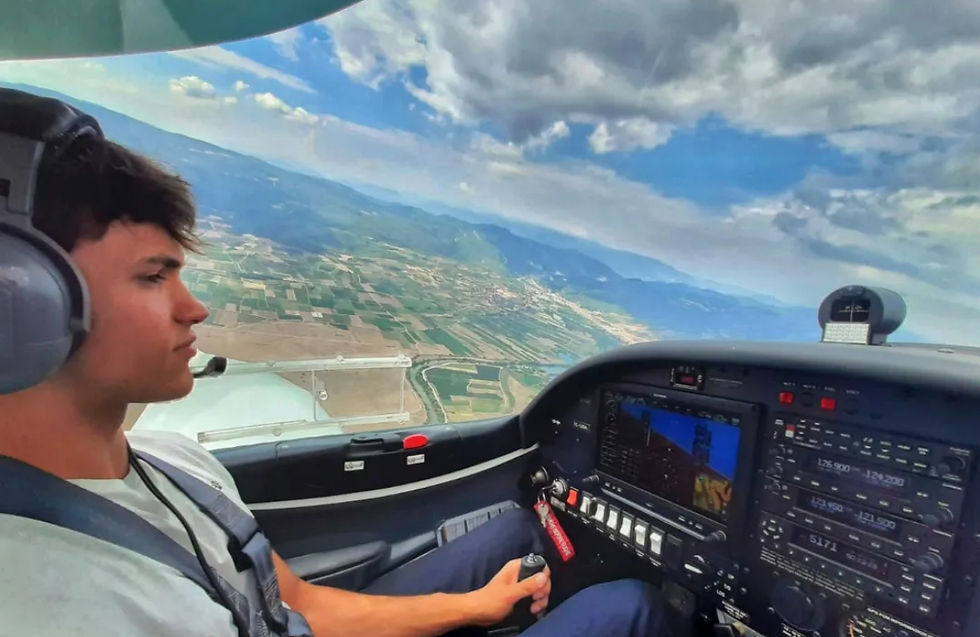
Then came PPL flight training. At that stage, it is shocking how quickly you are expected to control an aircraft and fly solo in such a short time.
Preparing for my first solo check was a unique experience. You have less than 15 hours of flight time to prove that you can safely control the aircraft and earn your instructor’s trust.
If your Flight Instructor (FI) releases you for the solo check flight, it means you are capable of landing the aircraft safely. All you need is to create a strong mental picture of every phase of flight, study thoroughly, and trust yourself.
Once you complete your first solo and experience that irreversible joy of flying alone, a new challenge begins: cross-country flights.
Cross-Country Flights and Situational Awareness
By that point, you have learned how to fly and communicate, but one essential skill becomes critical: navigation.
Thinking about your first solo cross-country flight at that experience level can be frightening. However, if you have studied navigation aids and understand how to properly use your VFR charts, you are prepared, although there is always an unexpected element in aviation.
For instance, during my cross-country flight, everything was going perfectly. I was about to land at my second destination when, as I turned final, a flock of storks appeared directly in front of me.
I had to execute an avoidance maneuver, which caused me to become high on final, so I performed a go-around.
That flight taught me an important lesson: always expect the unexpected and maintain high situational awareness.
The First Checkride: Managing Stress
Then comes your first checkride.
In my opinion, it may be the most stressful flight of your career, because it is the first time you are evaluated by an examiner sent by the Civil Aviation Authority.
You have to stay calm at all times, because a good pilot knows how to manage stress.
But if you feel too stressed, don’t panic, you are human too. Instead of focusing on your anxiety, focus on the flight itself and the outcomes you need to achieve. Just perform what you have trained for.
If something unexpected happens, don’t try to improvise outside standard procedures. Follow your training, apply the correct procedures, and always keep the aircraft in a safe configuration and within safe limits.
Growth Beyond Flying
Each stage teaches you something new not only about flying, but about yourself.
As far as I know, everyone has strengths and weaknesses. Improving your performance means understanding both and using them effectively to optimize your flights.
Over time, you learn that confidence comes from preparation and calmness comes from repetition. Mistakes become lessons, and challenges become part of your growth.


https://www.aeroscout.net/blog/integrated-vs-modular-pilot-training-explained Can you write a similar article like this and maybe compare Integrated and modular schools also ? i would have liked that in this article